EPA vs. EWG Water Standards: Why “Legal” Isn’t the Same as “Healthy”


Hello, neighbors! As your friendly local water treatment expert with Culligan, I spend my days working with homeowners, families, and empty nesters throughout Hardin, Bullitt, Grayson, Nelson, LaRue, and Hart Counties. We all want the best for our homes and our loved ones, and that often starts with something as fundamental as the water we drink every day.
One thing I sometimes hear when I talk to folks about their water is, “My water meets EPA standards, so it’s fine, right?” It’s a great question, and it’s rooted in a very reasonable assumption. Our local city and county water utilities here in Kentucky work incredibly hard. They’re dedicated professionals who strive daily to deliver clean water to your tap, and they do a commendable job meeting the legal requirements set for them.
But here’s where the conversation gets interesting. What exactly are those “standards” based on? Is a legal limit always the same as an ideal health goal? Let’s take a calm, honest look at the facts and see why the answer might be more nuanced than you think.
How the EPA Sets Its Limits: A Balancing Act
The U.S. Environmental Protection Agency (EPA) is the federal agency tasked with setting national standards for drinking water quality. When the EPA decides on limits for contaminants, they actually consider a couple of different numbers:
- Maximum Contaminant Level Goal (MCLG): This is a health-based target. For substances that could cause issues, the MCLG is the level at which no known or anticipated adverse effects on health would occur, with an adequate margin of safety. For many chemicals, especially those that might contribute to serious health concerns over time, this goal is often zero. Why zero? Because for certain substances, like those that may cause cancer, scientists believe there’s no level that can be considered completely without risk.
- Maximum Contaminant Level (MCL): This is the actual legal limit that water utilities must meet. It’s the highest level of a contaminant that is allowed in drinking water.
So, why the difference between a health goal (MCLG) and a legal limit (MCL)? This is the critical part. While the EPA aims to protect public health, their final MCL also takes into account what public water systems can realistically achieve using available water treatment technologies, and at a cost that is considered reasonable.
Before a new water regulation is finalized, the EPA conducts a thorough cost-benefit analysis. It’s much easier to put a dollar figure on the cost of upgrading treatment plants, installing new equipment, and performing ongoing tests. It’s far more challenging to calculate the dollar value of avoiding potential long-term health concerns for an entire population.
Think of it this way: the EPA operates within the framework and rules provided by Congress. Its regulations are often a compromise, carefully balancing health science with economic and technological feasibility. It’s not purely a health-driven number; it’s a number shaped by practical considerations and budgets.
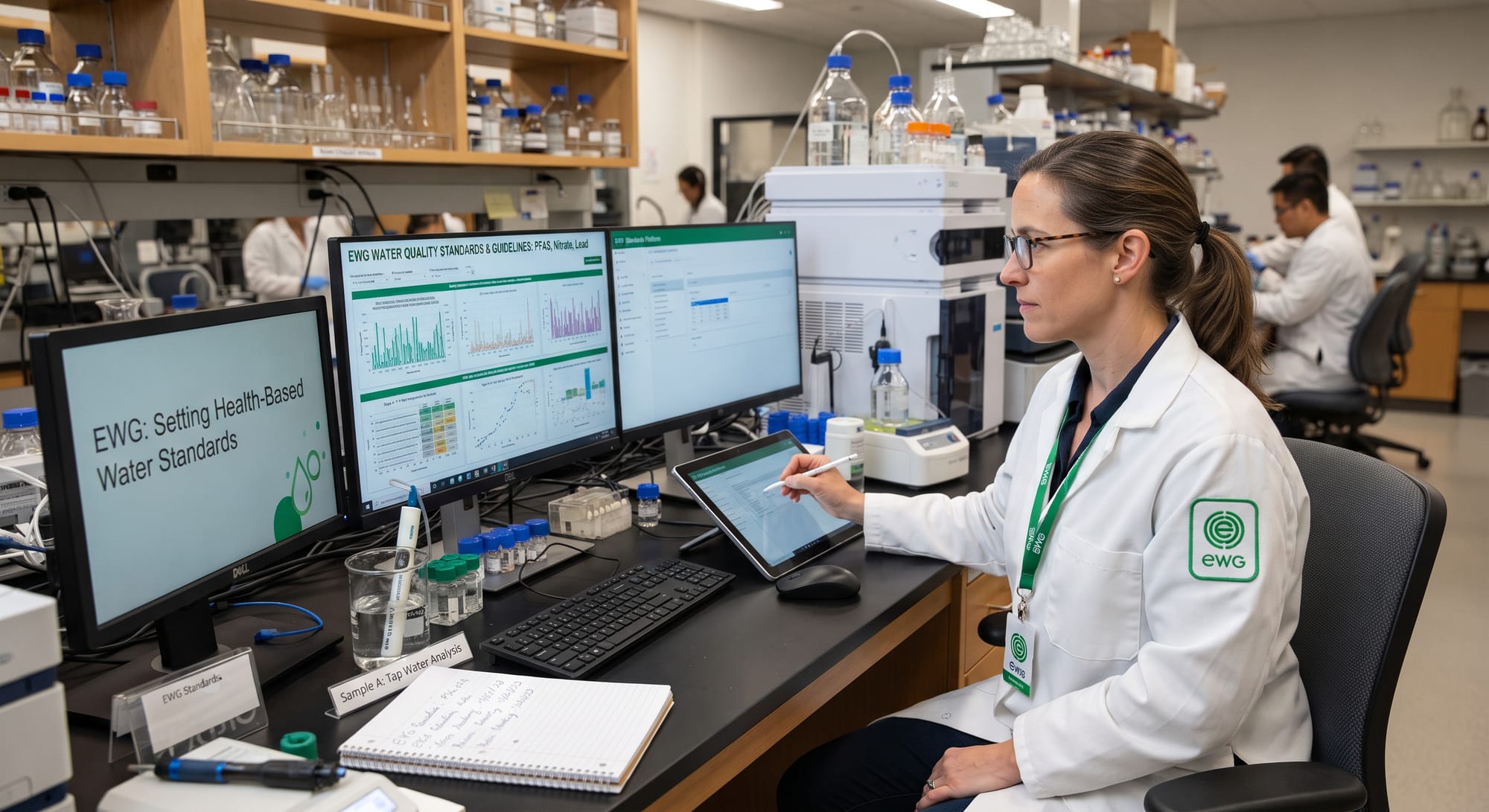
How EWG Sets Its Guidelines: Health First
Now, let’s look at the Environmental Working Group (EWG). This is a non-profit organization that provides detailed information and research on environmental health issues, including drinking water. EWG approaches water quality standards from a different perspective:
- Health Research Alone: EWG bases its guidelines solely on the latest scientific health research. They ask, “What level of a contaminant truly presents minimal to no health risk, based purely on scientific evidence?”
- 1-in-1,000,000 Lifetime Cancer Risk: For chemicals that may cause cancer, EWG’s health guideline is the level linked to a 1-in-1,000,000 lifetime cancer risk. This means if 1 million people drank water with that contaminant at that level over their entire lives, one additional person might develop cancer.
- No Cost or Compromise: Unlike the EPA, EWG does not factor in the cost of treatment, the technological challenges utilities might face, or political considerations when setting its health guidelines. Their focus is exclusively on public health.
It’s important to note that EWG isn’t inventing this “one-in-a-million” benchmark out of thin air. The EPA itself uses this same risk benchmark in other areas of regulation when considering health risks. EWG is simply applying a health-only standard consistently across all contaminants, without the added layers of cost and feasibility.
The Gap in Real Numbers: A Closer Look at Common Contaminants
Because of these different approaches, there’s often a significant gap between the EPA’s enforceable legal limits and EWG’s health-based guidelines. Let’s look at a few examples:
- Arsenic: A naturally occurring element, arsenic has been linked to health concerns at certain levels.
- The EPA’s legal limit for arsenic in drinking water is 10 parts per billion (ppb).
- EWG’s health guideline, based on the one-in-a-million lifetime cancer risk, is 0.004 ppb. This means the EPA’s legal limit is 2,500 times higher than what EWG considers a health-protective level.
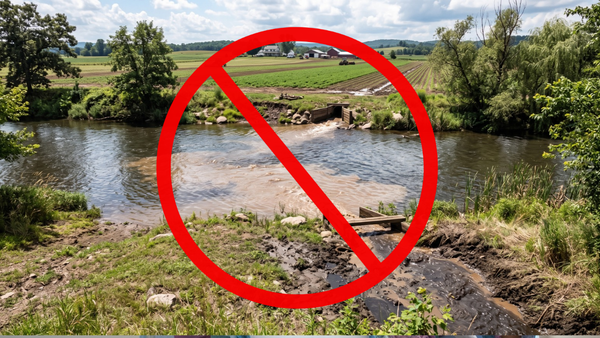
- Nitrate: Often from agricultural runoff, nitrate can be particularly concerning for infants.
- The EPA’s legal limit for nitrate, which was set back in 1962, is 10 parts per million (ppm).
- EWG’s health guideline is 0.14 ppm. This is significantly lower, reflecting updated health science since the original EPA standard was established.
- Chromium-6: You might recognize this from the Erin Brockovich story.
- Currently, there is no specific federal legal limit for chromium-6 in drinking water.
- Under a legal agreement, the EPA is required to decide by 2027 whether to set a federal standard for this contaminant. In the meantime, some states have set their own limits.
These examples clearly show that meeting a “legal” standard doesn’t necessarily mean the water meets the most stringent health-based guidelines available.
What the EPA Doesn’t Regulate At All
Beyond the differences in limits for regulated contaminants, there’s another important point: the vast majority of chemicals found in our environment are not regulated in drinking water at all.
- The EPA’s inventory of chemicals used in commerce, known as the TSCA Inventory, lists more than 86,000 different chemicals.
- Yet, out of this immense number, only about 90 contaminants currently have enforceable drinking water limits from the EPA.
- EWG, through its extensive testing and analysis, has found 324 distinct contaminants in U.S. tap water. The EPA regulates roughly the same 90 of them. That leaves a lot of chemicals without federal limits in your drinking glass.
Let’s use a specific example: Perchlorate.
Perchlorate is a chemical primarily associated with rocket fuel and explosives. When present in drinking water, it can interfere with the thyroid gland’s ability to take up iodide, which the body needs to make essential thyroid hormones.
Here’s a quick timeline of its regulatory journey:
- 2011: The EPA determined that perchlorate should be regulated in drinking water because of potential health concerns.
- 2020: The EPA reversed its previous decision and chose not to regulate perchlorate, citing that the benefits of regulation did not justify the costs. This is a clear instance of costs being weighed against health protections, which the EPA even put into writing in its proposal.
- 2023: A federal appeals court overturned the EPA’s reversal, stating that the agency’s decision not to regulate was unlawful.
- Today: Under a court agreement, a final rule for perchlorate is due by May 2027, and water systems may have until around 2030 to comply with any new standards.
This entire process illustrates a crucial point: it can take roughly 20 years or more from the time a chemical is identified as a concern and the EPA decides it should be regulated, until water systems might actually be required to comply with new limits.
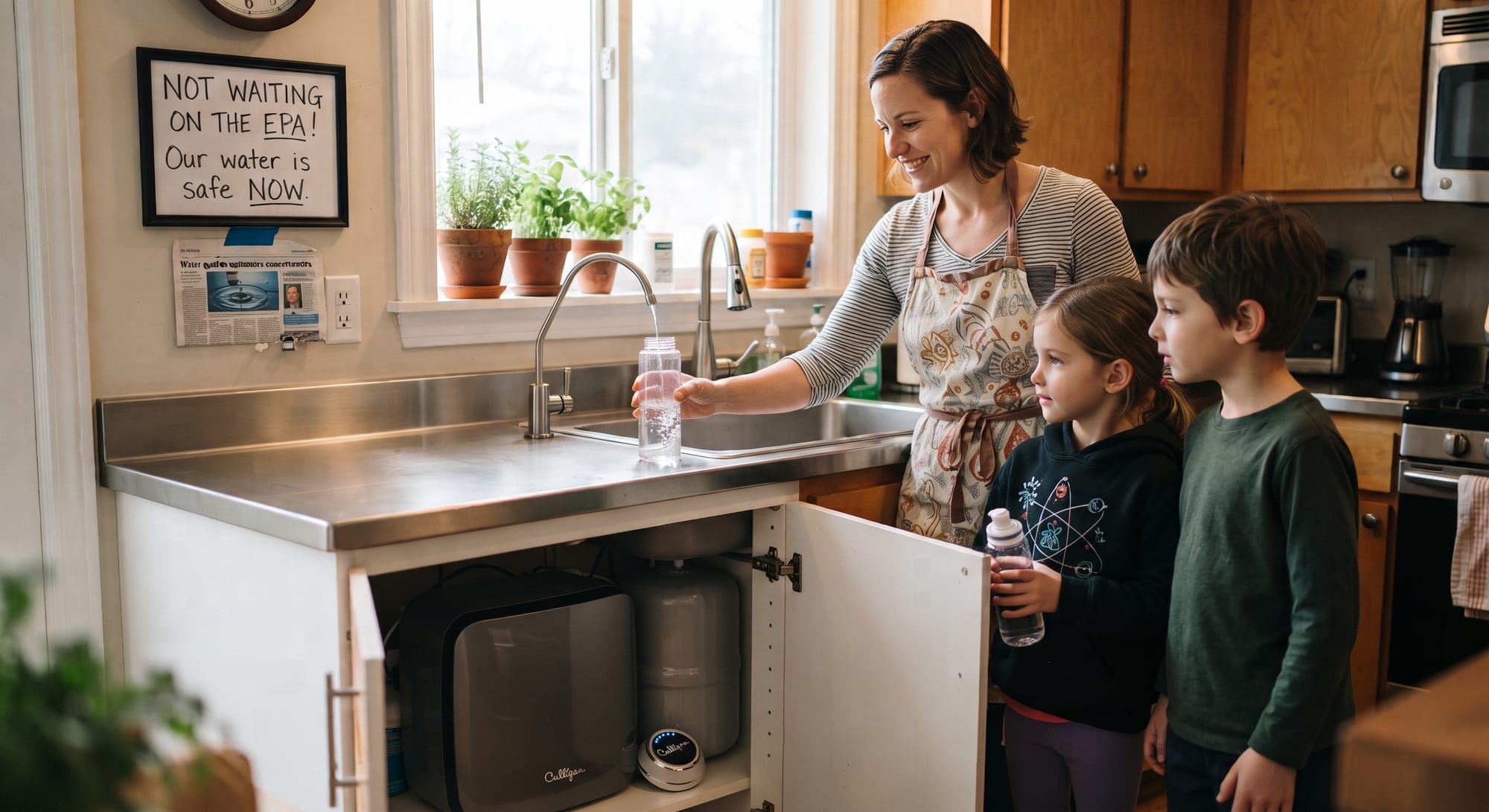
Why Families Shouldn’t Wait on the EPA
The regulatory process, while thorough, is undeniably slow and bureaucratic. Consider the recent example of PFAS chemicals, often called “forever chemicals.” It took the EPA over 20 years to finalize enforceable limits for just six specific PFAS compounds. And even after years of work, these decisions can still face challenges and changes.
The message here isn’t to be critical of the regulatory bodies, but simply to recognize the reality of how these systems work. Important decisions about water quality, even for widely recognized contaminants, can take decades to move from scientific concern to enforceable standards in your local community, whether you’re in LaRue County or Nelson County.
For many families, that’s simply too long to wait. You don’t have to put your family’s health on hold while Washington decides what goes into your glass. You have the power to be proactive about your home’s water quality today.
A Fair Word About EWG’s Critics
It’s true that some critics suggest EWG’s guidelines are too strict or might cause unnecessary alarm. They argue that applying such stringent, health-only benchmarks can create a perception that public water is “dangerous” even when it meets all legal requirements.
However, it’s important to understand EWG’s intent. When a contaminant level in your water goes above an EWG guideline, it doesn’t automatically mean your water is unsafe or dangerous today. What it means is that a benchmark based purely on health science, without considering economic costs, has been exceeded.
EWG’s numbers aren’t extreme in their scientific basis; they simply reflect what “health-only” looks like when the math doesn’t include the financial burdens on utilities or political compromises. They offer a different lens through which to view water quality, focusing squarely on long-term health considerations.
Check Your Own Water
Knowledge is power, especially when it comes to your home and family. An excellent way to understand the specific water quality in your area is to use EWG’s online tool:
- Go to the EWG Tap Water Database.
- Enter your ZIP code and select your water utility.
- For each contaminant listed, you’ll see a comparison: the “legal limit” set by the EPA and the “EWG health guideline.” This side-by-side view can be very illuminating, helping you understand the difference for the water coming into your home in Bullitt County, Hardin County, or anywhere else in our service area.
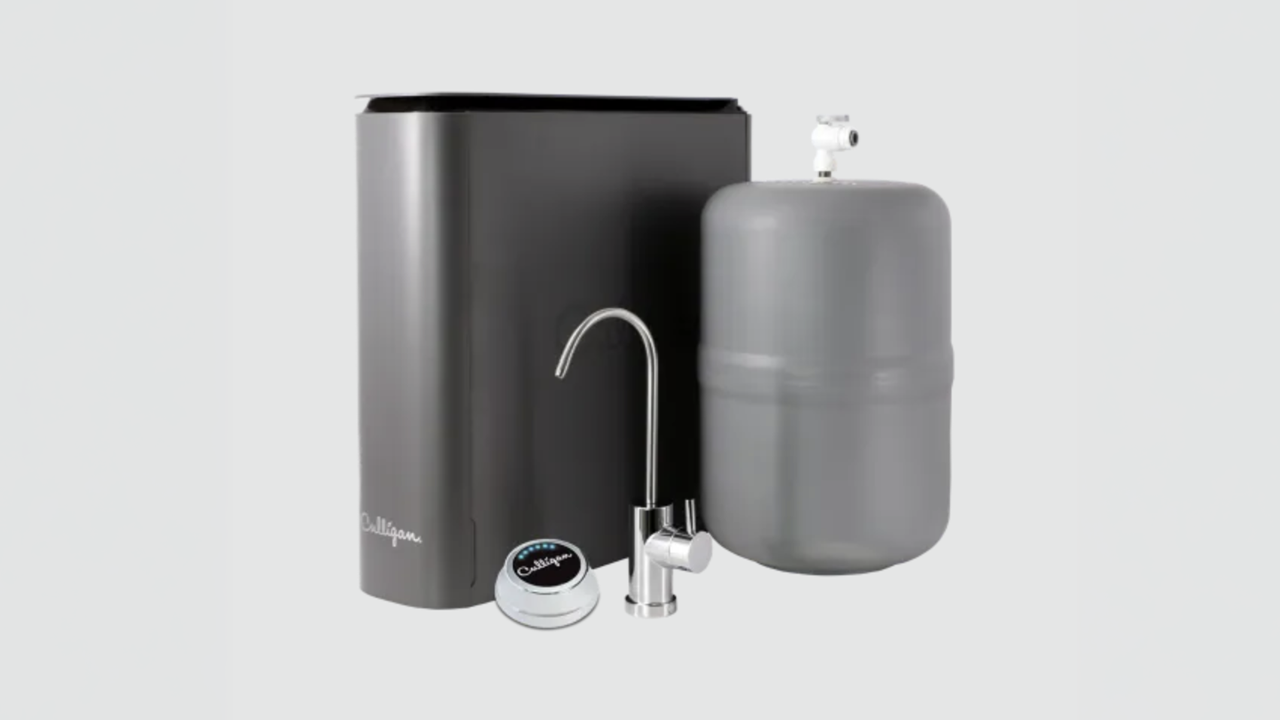
The Solution: Culligan Aquasential Reverse Osmosis with the Total Defense Cartridge
Understanding these differences might leave you wondering, “What can I do for my family?” That’s where Culligan comes in. We believe everyone deserves cleaner, better-tasting water right in their home.
Our solution is the Culligan Aquasential Reverse Osmosis (RO) System with the Total Defense Cartridge. This advanced system works to address a wide range of water quality concerns.
Here’s what makes it an outstanding choice for your family:
- It’s certified to reduce over 90 contaminants, including common concerns like PFAS, lead, arsenic, mercury, and microplastics. (Please note: This applies when configured with the post-filter and Total Defense cartridge, and these contaminants may not be present in your water.)
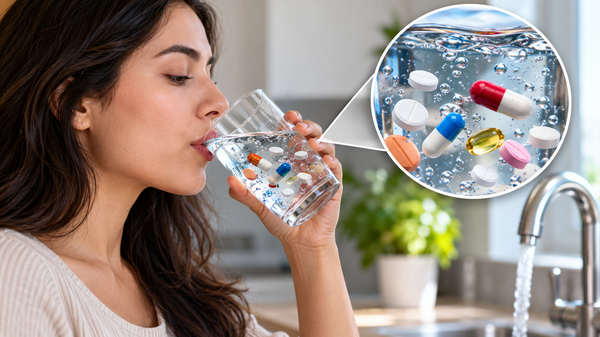
- The Total Defense Cartridge adds an extra layer of filtration specifically designed for substances like PFAS, pharmaceuticals, mercury, VOCs (volatile organic compounds), pesticides, and more.
- To put its power into perspective, the Culligan Aquasential Reverse Osmosis System with the Total Defense Cartridge is certified to reduce 18 times more contaminants than the leading standard filter pitcher.
Just as federal guidelines focus on dozens of priority contaminants, our system is independently certified to reduce over 90 specific impurities, including lead, PFAS, and arsenic. That’s a powerful statement about its capability, helping to address a broad spectrum of concerns you might have about your tap water. It’s about taking proactive steps to enjoy clearer, cleaner water that meets your family’s health goals.
Ready to Explore Your Water Quality?
Ultimately, the choice about your home’s water quality is yours. My goal at Culligan is to provide you with the facts so you can make an informed decision for your family. If you’re interested in learning more about the water coming into your home in Hardin, Bullitt, Grayson, Nelson, LaRue, or Hart Counties, we’re here to help.
I invite you to schedule a free in-home water test and consultation with me as your local Culligan expert. Here’s what you can expect:
- I will visit your home at your convenience.
- I will test your water right there, explain what’s in it, and answer questions you have.
- Based on your test results and your family’s needs, I will recommend options that could work for you.
- Culligan offers flexible solutions, whether you prefer to buy, finance, or rent a system.
Take the first step towards greater peace of mind about your family’s drinking water. Call me today or book your free consultation online by clicking "Learn More" below.
shawn.paul@culligankentucky.com
502-756-1366
No pressure, just an honest conversation.
Get a free water test or consultation on a Culligan Aquasential Reverse Osmosis.
FAQ's
- If my tap water looks clear and smells fine, does that mean it’s completely pure?
Not necessarily, though it’s completely natural to assume so! Most of us rely on our senses—sight, smell, and taste—to judge whether water is clean. When city and county water utilities treat water, they do a great job making sure it is clear and free of biological organisms like bacteria.
However, many common dissolved substances cannot be seen, smelled, or tasted. Minerals, lead from older service lines or home plumbing, nitrates, and microscopic compounds like PFAS or disinfection byproducts are completely invisible in a glass of water. A water supply can be crystal clear and still contain trace levels of dissolved minerals and chemical compounds.
The only reliable way to know what is actually dissolved in your water is through testing. Our free in-home test quickly evaluates aesthetic factors like hardness, chlorine taste, and Total Dissolved Solids (dissolved minerals). For complex contaminants like PFAS or heavy metals, specialized third-party laboratory analysis is required. Culligan's laboratory in Rosemount, IL, can provide you such services. - Will boiling my tap water remove contaminants like lead, nitrates, or PFAS?
No, boiling your water will not reduce these types of contaminants—in fact, it can actually do the opposite.
Boiling is very effective for biological concerns (like bacteria or parasites) because the high heat neutralizes living organisms. However, our municipal utilities in Kentucky already treat and disinfect city water for biological issues before it reaches your home.
When it comes to heavy metals (like lead and arsenic), nitrates, or synthetic chemicals (like PFAS), boiling does not break them down. Instead, as water turns to steam and evaporates during boiling, the water volume decreases while the minerals and chemicals stay behind. This actually concentrates those substances in the remaining water.
To significantly reduce dissolved heavy metals and microscopic chemical compounds at the tap, homeowners look to specialized mechanical filtration, such as a certified reverse osmosis system, rather than heat or basic boiling.
Culligan of Elizabethtown
113 Gaither Station Road
Elizabethtown, KY 42701
502-756-1366
Proudly serving Hardin County (including Elizabethtown, Radcliff, and Vine Grove), alongside neighboring communities throughout Nelson, Bullitt, Grayson, LaRue, and Hart counties