Is Bottled Water Safe to Drink?

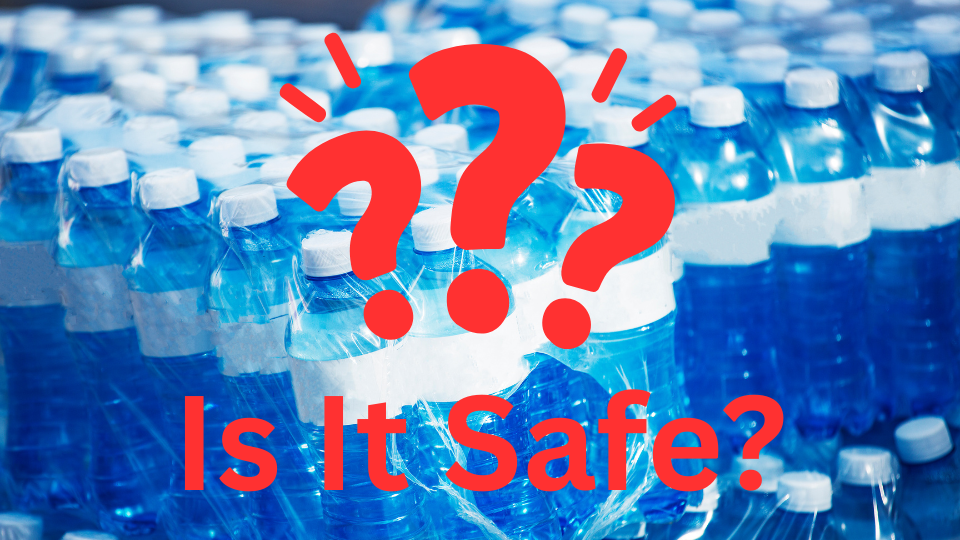
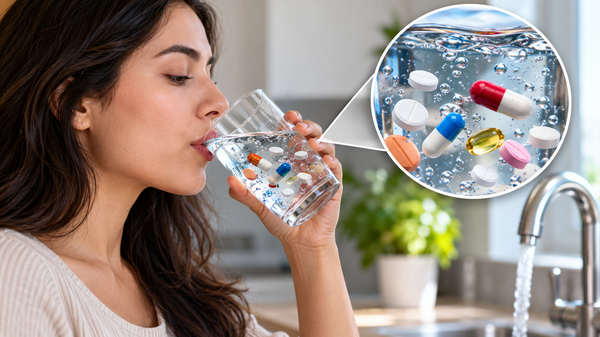
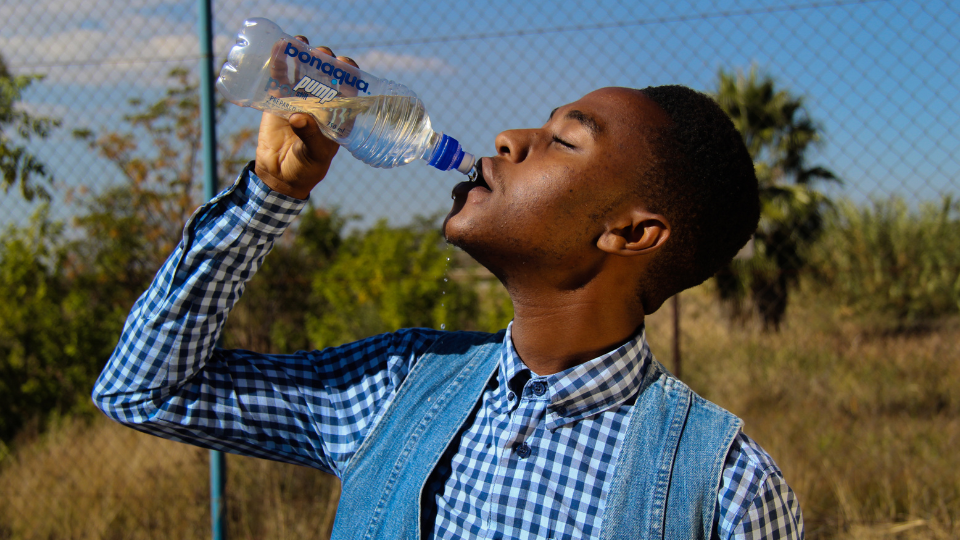
Pick up a plastic water bottle right now and take a sip. In that single liter, there could be roughly 240,000 nanoplastic particles floating around, far too small to see with the naked eye. That number comes from a 2024 study by Columbia and Rutgers universities, and it's 10 to 100 times higher than what earlier research found. If you have always reached for bottled water because it felt like the safer, cleaner choice, this is a good moment to slow down and look at what is actually in the bottle.
What's Actually Floating in Your Water Bottle
Plastic pollution comes in two sizes that matter here. Microplastics are fragments up to 5 millimeters long, about the size of a grain of rice. Nanoplastics are far smaller, under 1 micrometer, small enough that scientists only recently figured out how to reliably count them.
That 2024 study used a new technique: researchers at Columbia and Rutgers filtered bottled water from three different brands through an ultrafine membrane, then shone two lasers calibrated to recognize the chemical signature of plastic particles as small as 50 to 100 nanometers, roughly the width of a virus. What they found surprised even the scientists involved. Most of the particles were not PET, the plastic most water bottles are actually made from. Instead, they found more polyamide (a type of nylon) and polystyrene, suggesting the filling and purification process itself is a source, not just the bottle breaking down. And 50 to 100 nanometers is only the current detection limit, not a hard floor. Researchers believe there are likely even smaller particles they simply cannot measure yet.
What Scientists Are Learning About Nanoplastics and Your Health
Here is why the size matters so much. Particles this tiny are small enough to pass through the walls of your gut and lungs and get into your bloodstream. From there, they can travel to your heart and brain, and they have even been found crossing the placenta into unborn babies. Researchers at Stanford Medicine have found microplastics in the brain, testicles, heart, stomach, lymph nodes, and placenta, and detected them in urine, breast milk, semen, and even meconium, a newborn's very first stool. As one Stanford physician put it, "We're born pre-polluted".
Nobody is claiming these particles definitely cause disease. The science is still young, and the researchers are honest about that. As Columbia environmental chemist Beizhan Yan put it, "We know we're getting exposed, but we don't know the toxicity of the exposures". But some findings are hard to ignore. A paper published in the New England Journal of Medicine in 2024 followed patients who had microplastics found in the plaque removed from their arteries, and those patients had a meaningfully higher risk of heart attack, stroke, and death over the following two years than patients whose plaque was plastic-free. Separately, researchers at the University of Rhode Island gave mice water containing microplastics for just three weeks and found the particles had crossed the blood-brain barrier, a protective shield that is supposed to keep out viruses and bacteria, and had settled deep in brain tissue. The mice started showing dementia-like behavior changes in that short window.
The "Purity" Story Bottled Water Sells Doesn't Quite Hold Up
Here is the part that should give you pause if you buy bottled water specifically to avoid what is in your tap. Testing has found microplastics in common bottled water brands, sometimes hundreds of thousands of particles per liter. One likely source researchers point to is the bottle cap itself: every time you twist it on or off, it can shed tiny particles directly into your water. And right now, no federal requirement in the United States forces municipal water systems to test for or remove microplastics, which means neither tap water nor bottled water has been held to a real standard on this issue yet. Bottled water is sold on the promise of purity, but when it comes to microplastics specifically, that promise has not been backed up by meaningfully tighter testing or oversight than what comes out of your kitchen faucet.
Reverse Osmosis: A Filter Built to Catch What Bottles Miss
If boiling water, bleaching it, or just letting it sit out sounds like a fix, it is not. None of those methods reduces microplastics. The most reliable solution available to homeowners right now is a certified reverse osmosis (RO) system.
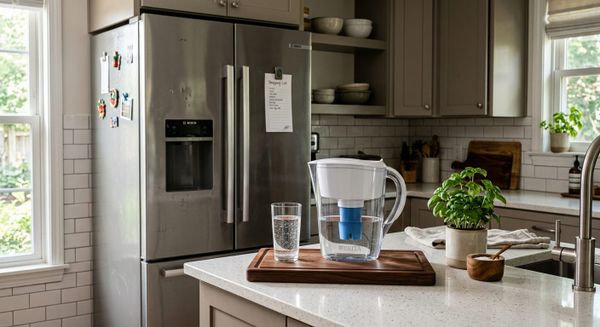
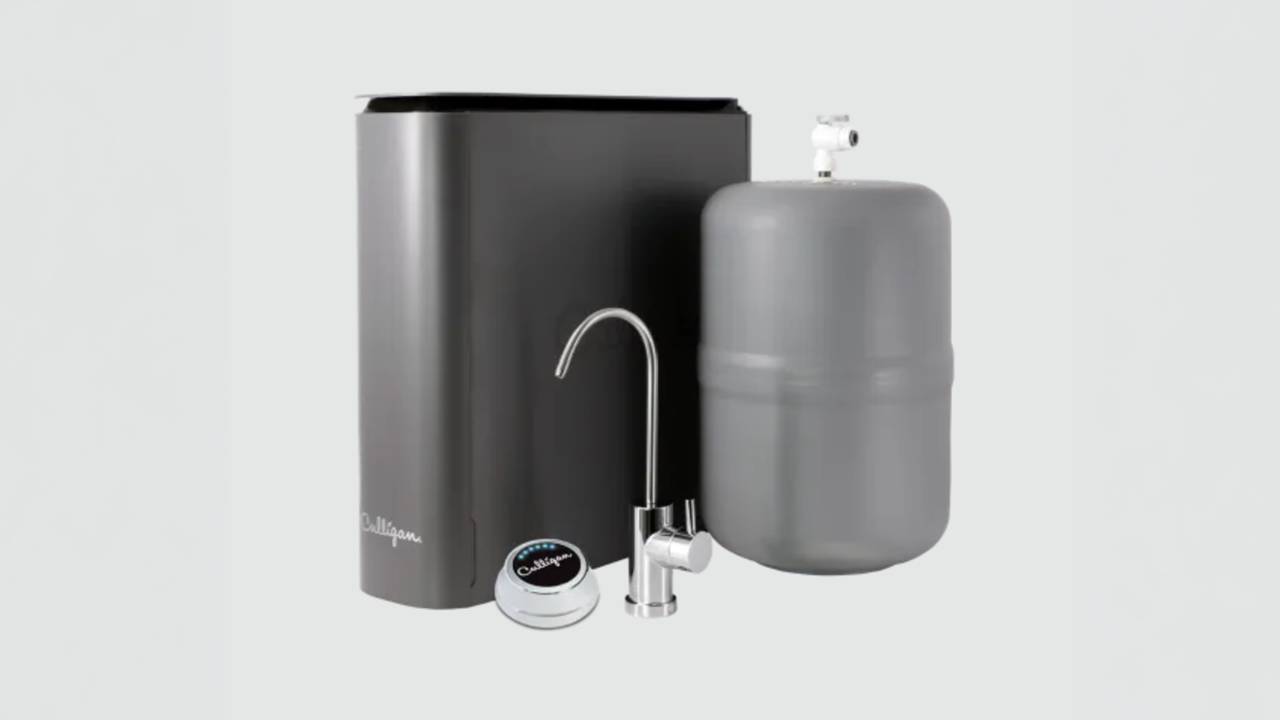
Reverse osmosis pushes water through a series of filtration stages, including a tightly woven, semipermeable membrane that physically blocks particles too small to see. Culligan's Aquasential RO systems, when paired with the Total Defense cartridge, are certified to reduce more than 99% of microplastics and target more than 90 other common contaminants, including chlorine, lead, and arsenic. That certification matters. Not every filter is built to catch particles this small. A basic pitcher or refrigerator filter may catch some contaminants but miss microplastics entirely, and the most reliable systems carry independent, third-party certification to ANSI/NSF standards so you are not just taking a manufacturer's word for it.
What You Gain Once You Make the Switch
Beyond peace of mind about what you are actually drinking, switching to a home RO system comes with a few practical perks:
- Fewer filter changes. Culligan RO filters typically need replacing only every 1 to 2 years, with the membrane itself lasting 3 to 5 years. Compare that to pitcher filters, which can need swapping out as often as every two months.
- Less plastic waste. Filtered water straight from your own kitchen tap means fewer single-use bottles bought, used, and thrown away, which also means fewer new microplastics being created in the first place.
- No more hauling. No more loading cases of water into your cart, out to the car, and up the stairs. Fresh, filtered water is simply there when you turn on the tap.
None of this means you need to panic every time you twist open a bottle cap. But if today is the first time you have really thought about what might be floating in that water, it is worth taking the next step and finding out what is actually coming out of your own tap, and what you can realistically do about it.
If you would like personalized help figuring out the right water treatment setup for your home, reach out to me:
shawn.paul@culligankentucky.com
502-756-1366
Let me help you make the right decision for your water treatment needs.
Get a free water test or consultation on a Culligan Aquasential Reverse Osmosis.
FAQ's
- How do I know if I need a water softener versus a whole-house carbon filter?
Choose a water softener if you are dealing with mineral buildup like white crust on your faucets, spotty glassware, stiff laundry, or dry skin and hair, which are caused by dissolved calcium and magnesium. Choose a whole-house carbon filter if your main issues include chemical smells, a heavy chlorine taste, sulfur or rotten-egg odors, or organic discoloration. Hardness requires an ion exchange resin to condition the mineral content, whereas taste and odor issues need carbon adsorption, though many setups pair both for total coverage. - How often do UV light disinfection systems need bulb replacements and maintenance?
UV germicidal lamps lose their effective UV-C output after 12 months of continuous runtime, meaning the bulb needs an annual swap even if the indicator light stays on. Along with yearly bulb changes, pull and clean the quartz sleeve every 6 to 12 months using a mild scale remover, because mineral film blocks radiation intensity. Pair this with a fresh 5-micron pre-filter every 3 to 6 months so floating sediment never shields bacteria or viruses from passing UV rays.
Culligan of Elizabethtown
113 Gaither Station Road
Elizabethtown, KY 42701
502-756-1366
Proudly serving Hardin County (including Elizabethtown, Radcliff, and Vine Grove), alongside neighboring communities throughout Nelson, Bullitt, Grayson, LaRue, and Hart counties.