Water Hardness 101: Why Your Appliances Are Scaling Up

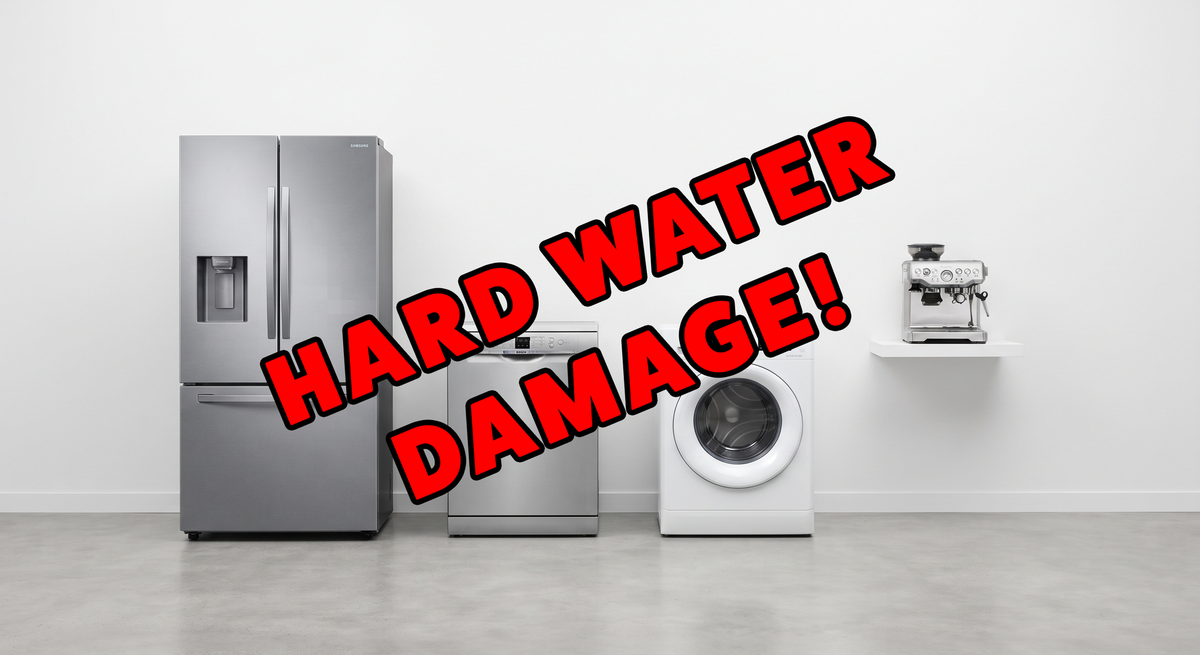
If you have ever scrubbed a white, crusty ring out of your coffee maker or noticed your dishwasher just is not getting glasses clean anymore, you have met hard water. It is one of those problems that builds up so slowly most homeowners do not notice it until an appliance dies years before it should. Here is what is actually happening, what it costs you, and what you can do about it.
What Makes Water "Hard" in the First Place
Hard water simply means water carrying a lot of dissolved calcium and magnesium. As groundwater travels through rock and soil, especially limestone, it picks up these minerals along the way [Source: Scale-O]. Calcium and magnesium are not a health problem. The trouble starts when that water hits your pipes and appliances. As the water heats up or evaporates, those minerals do not just disappear. They separate out and cling to whatever surface they touch, forming a chalky buildup known as scale.
You have probably already seen the everyday warning signs without knowing what caused them [Source: EcoWater SoCal]:
- White spots on dishes and glassware
- Cloudy glasses even fresh out of the dishwasher
- Soap scum on your shower walls and doors
- Water pressure that seems to be slowly dropping
Those are not random annoyances. They are hard water quietly leaving its mark.
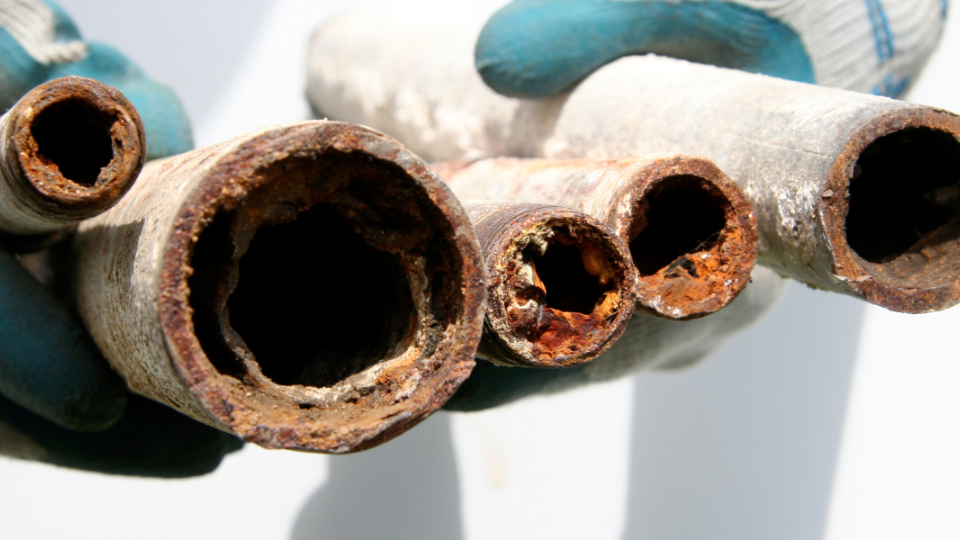
How Hard Water Attacks Your Appliances, One by One
Water heaters take the biggest hit. A study commissioned by the Water Quality Association tested 30 water heaters, comparing units running on softened water against units running on hard water. The results were not close [Source: Diamond Crystal Salt / WQA study]:
- Gas storage water heaters on soft water held their full factory efficiency rating over a 15 year lifetime. On hard water, they lost about half their efficiency over that same span.
- For every five grains per gallon of hardness, a gas storage heater running 50 gallons of hot water a day loses about 4 percent efficiency and costs about 4 percent more to run.
- Electric elements collect about two pounds of rocklike mineral scale every single year. Softened water drops that yearly buildup down to a tiny 0.03 pounds (roughly 14 grams). Giving your heater soft water means the element actually stays in direct contact with the water instead of cooking under an insulating mineral blanket.
- Tankless water heaters running hard water needed a deliming service after just 1.6 years, and their efficiency never fully recovered afterward.
That toll adds up over an appliance's whole life span [Source: IndyWaterPros / WQA study]:
- Electric water heaters: expected 13 years, cut to about 6.5 years on hard water
- Gas water heaters: expected 11 years, cut to about 5.5 years on hard water
I have personally worked with clients who have gone through more than one water heater replacement in a home, and hard water was the common thread every time.
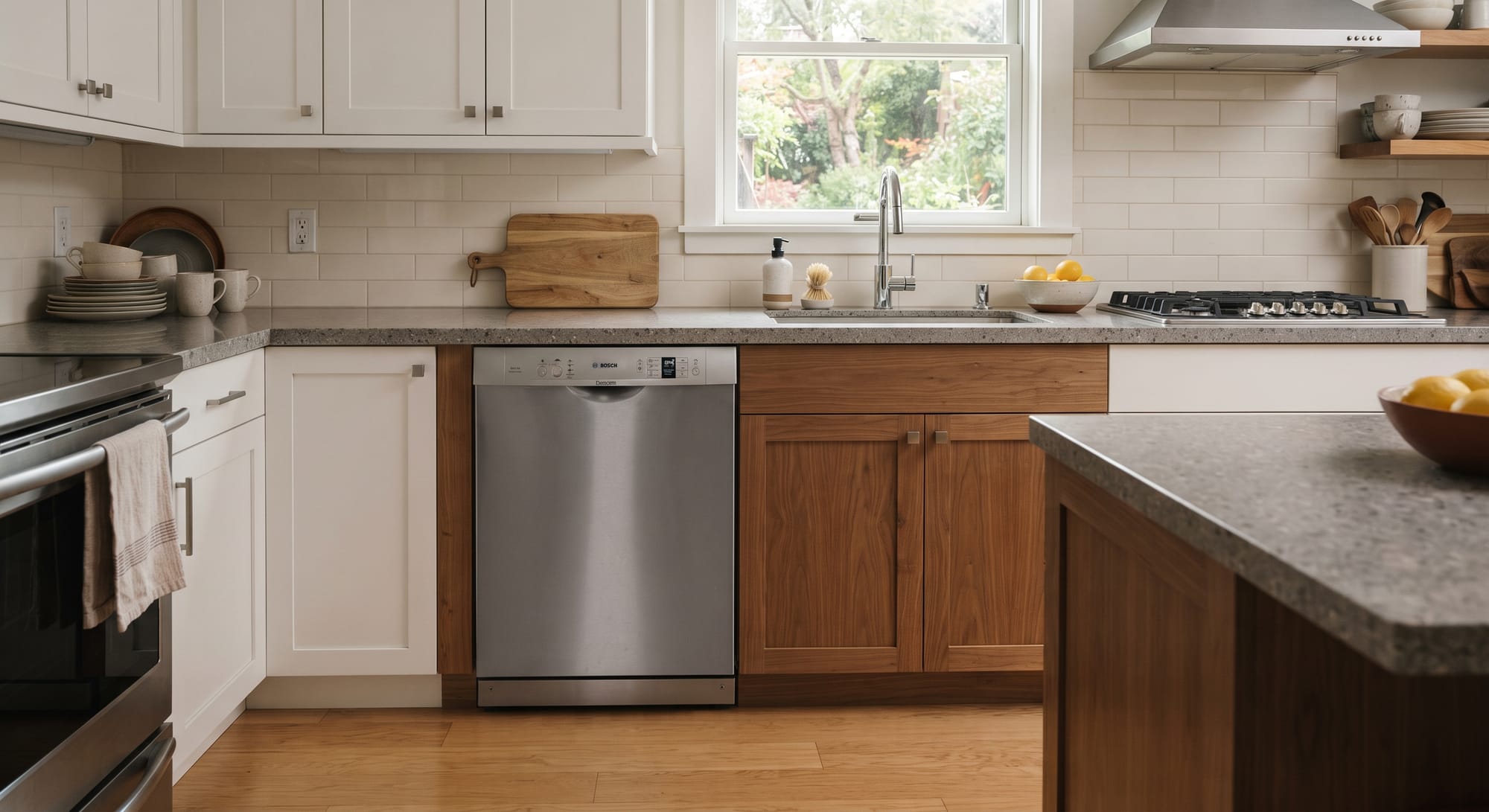
Dishwashers and washing machines wear out faster too. The same appliance lifespan study found real drops in how long these machines last [Source: IndyWaterPros / WQA study]:
- Washing machines: expected 11 years, cut to 7.7 years
- Dishwashers: expected 10 years, cut to 7 years
Part of the reason is that hard water keeps soap and detergent from dissolving fully, so homeowners end up using significantly more of it, in some cases up to 70 percent more, just to get the same clean [Source: IndyWaterPros / WQA study]. Inside a dishwasher, mineral deposits collect inside the spray arms and filters, which is why glassware comes out cloudy and dishes get a white film even when the cycle ran fine [Source: Scale-O].
I hear this exact scenario from clients more often than you would think. Someone calls to say their dishwasher just stopped working, and when the repair technician shows up, hard water buildup is the diagnosis. It is one of the most common appliance calls in this line of work.
Small kitchen appliances feel it too. Coffee makers and electric kettles have small heating elements that scale up fast. Once that happens, you will notice [Source: Scale-O]:
- Longer boiling times
- Higher electricity use
- The need for regular descaling just to keep them working normally
Faucets and fixtures show the damage on the outside. The same appliance study found faucet lifespan dropping from 9 years to about 5.4 years under hard water conditions [Source: IndyWaterPros / WQA study]. In the field, I regularly see this show up as crusty white calcium buildup on the base of faucets and all over sprayer heads.
The Real Cost Adds Up
None of this happens overnight, which is exactly why it catches people off guard. A water heater that should last over a decade is instead getting replaced at the halfway mark. A dishwasher that should run for years is failing early, and the repair bill lands on top of the extra detergent and higher energy costs you have already been paying without realizing it. I want to be upfront that our source material did not include specific dollar figures for repair or replacement costs, so the numbers above are shown in the form the research actually reported them, which is lost years of appliance life and lost efficiency. Even without a dollar figure attached, losing half the expected lifespan of a water heater or dishwasher is a real hit to any household budget.
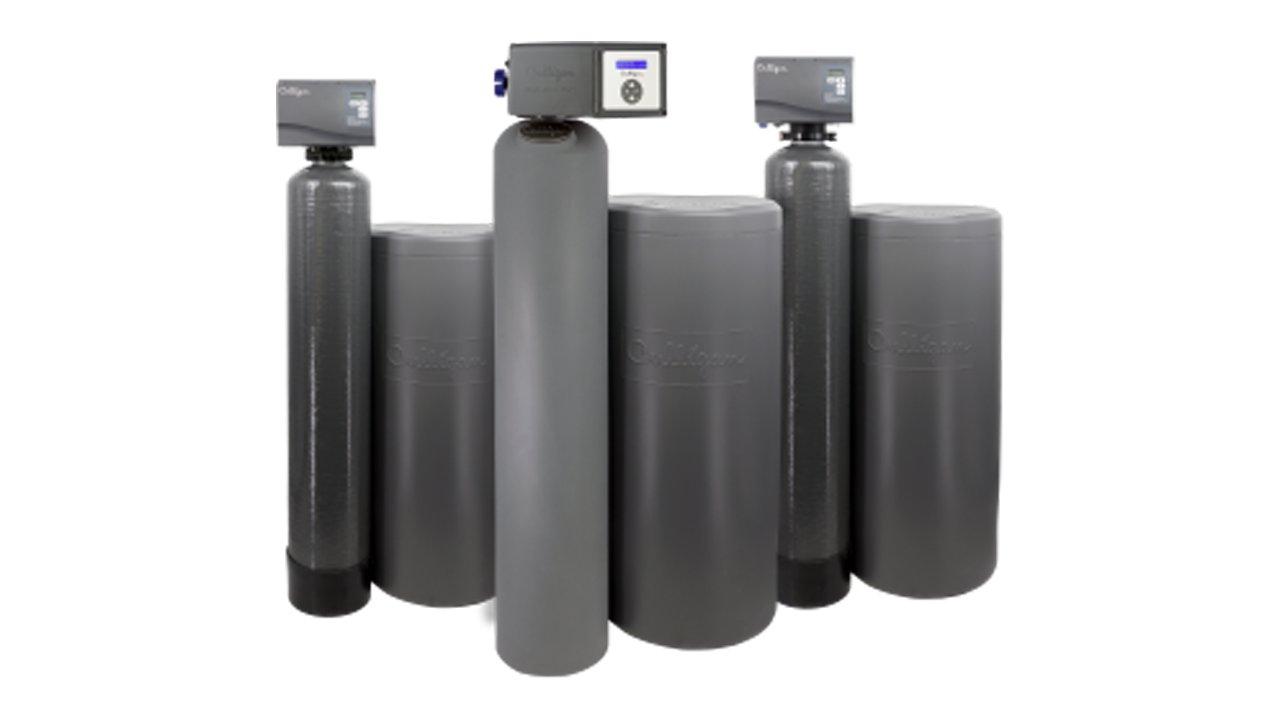
How a Water Softener Breaks the Cycle
A Culligan water softener works by exchanging the calcium and magnesium in your water for sodium or potassium ions, a process known as ion exchange. Once those hardness minerals are removed before the water ever reaches your pipes, there is nothing left to form scale.
The impact on your appliances is significant:
- Gas storage water heaters running on softened water held their full efficiency rating for the entire 15 year test period [Source: Diamond Crystal Salt / WQA study].
- Separate research cited by the Water Quality Association found that softened water can improve water heater efficiency by up to 30 percent [Source: EcoWater SoCal].
- Softened water also means less soap and detergent needed for the same results, fewer spots and less scum on dishes and fixtures, and appliances that are simply not fighting mineral buildup every time they run.
If you want that level of detail for your own home, testing your water is really the only way to know exactly where you stand. I can easily provide that information. I provide free in-home water testing.
The Bottom Line
Hard water does not announce itself. It shows up slowly, in a water heater that dies too soon, a dishwasher that just is not cutting it anymore, or dark stains ringing your faucets. The appliances in your home were built to last a lot longer than hard water lets them.
If you are curious what your own water hardness looks like, or you want to talk through whether a softener makes sense for your home, reach out. You can contact me at:
shawn.paul@culligankentucky.com
502-756-1366
I will help you figure out what is really going on with your water.
Get a free water test or consultation on a Culligan Aquasential Reverse Osmosis.
FAQ's
- Does hard water increase my monthly utility bills?
Example with water heaters or dishwashers: an 1/8 to 1/4 inch of limescale buildup on heating elements creates a thermal barrier, forcing water heaters and dishwashers to burn up to 20% to 30% more energy to reach desired temperatures. This equates to higher energy bills. - How can I tell if I have hard water?
Watch for these classic giveaways around the house:
- The crust: White scale buildup on faucet aerators, showerheads, or glass shower doors.
- The wash: Soap and shampoo that feel reluctant to lather.
- The dishes: Cloudy spots or film on glassware straight from the dishwasher.
- The feel: Skin and hair that feel a bit dry or squeaky after a shower.
- OR call me for a free water test. Culligan has the answers.
Culligan of Elizabethtown
113 Gaither Station Road
Elizabethtown, KY 42701
502-756-1366
Proudly serving Hardin County (including Elizabethtown, Radcliff, and Vine Grove), alongside neighboring communities throughout Nelson, Bullitt, Grayson, LaRue, and Hart counties.